
Healthy Eating
A great way to start your child’s life well is to ensure they have a healthy, balanced diet so that their body can grow and they have the energy to succeed. This page covers all topics from food we serve in-house such as our cooked meal menu, as well as guides and suggestions on what to include in a home-made packed lunch and tips for drinking water.
Please use the buttons below to take a short-cut to each topic.
Our Menu
The Gooseberry Bush Day Nursery caters to the specific dietary and allergy needs of all children. For more information about our policies and procedures around food, please see our ‘Food, Drink & Allergies Policy’. You can find our latest policies on our policies page.
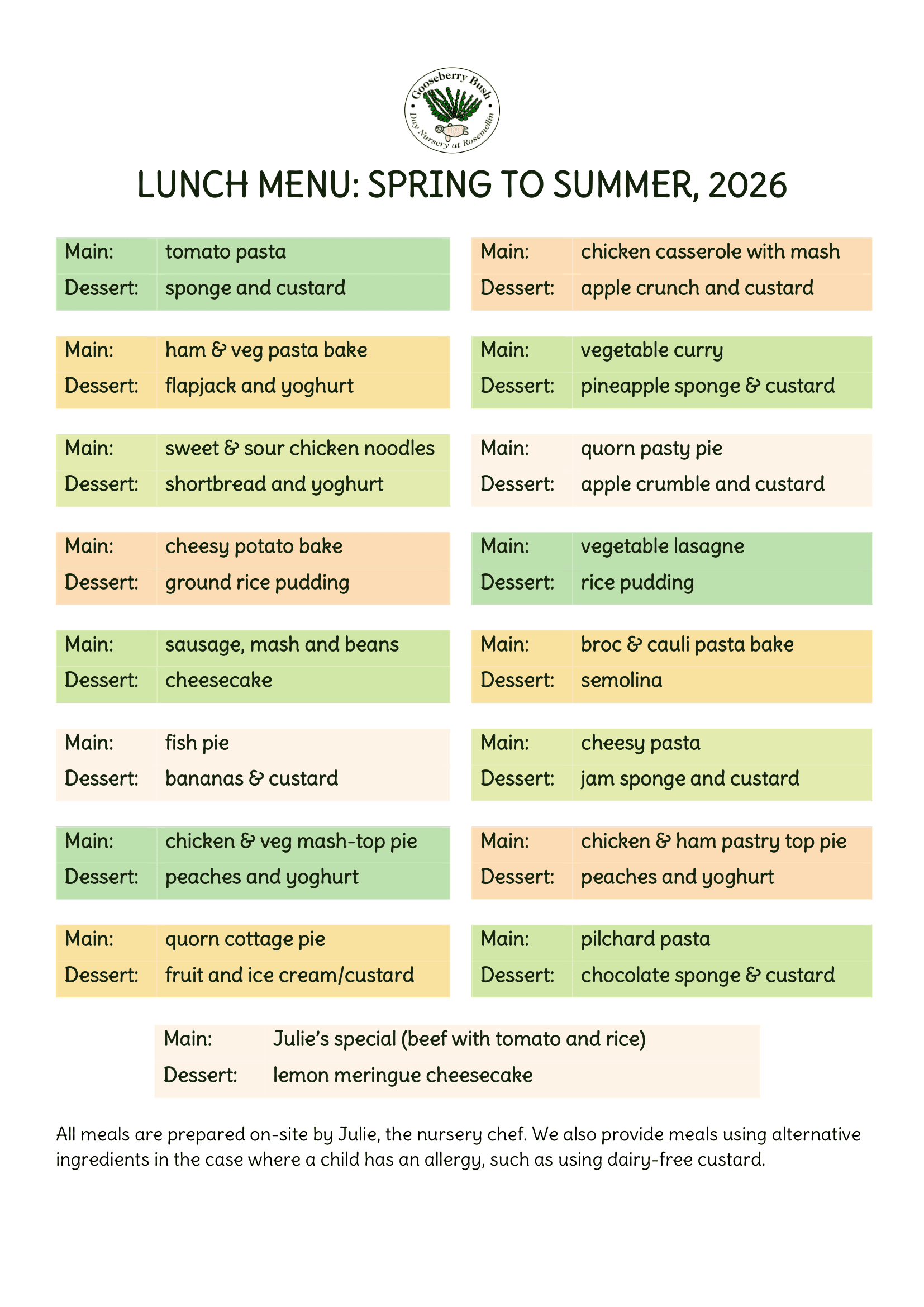
Note on menu
Our menu is not set in stone as sometimes meals are swapped around day wise. This is so all children get to experience different meals whilst attending nursery and to make lunch time interesting for their developing minds.
Additionally, you can not pick and choose which meal you want your child to eat. This is set at the beginning of each day.
How to make the perfect packed lunch
There are a variety of guides out there to help you figure out what the best food options that are available for your child, however we have compiled a list of information here that we believe will help get you started.
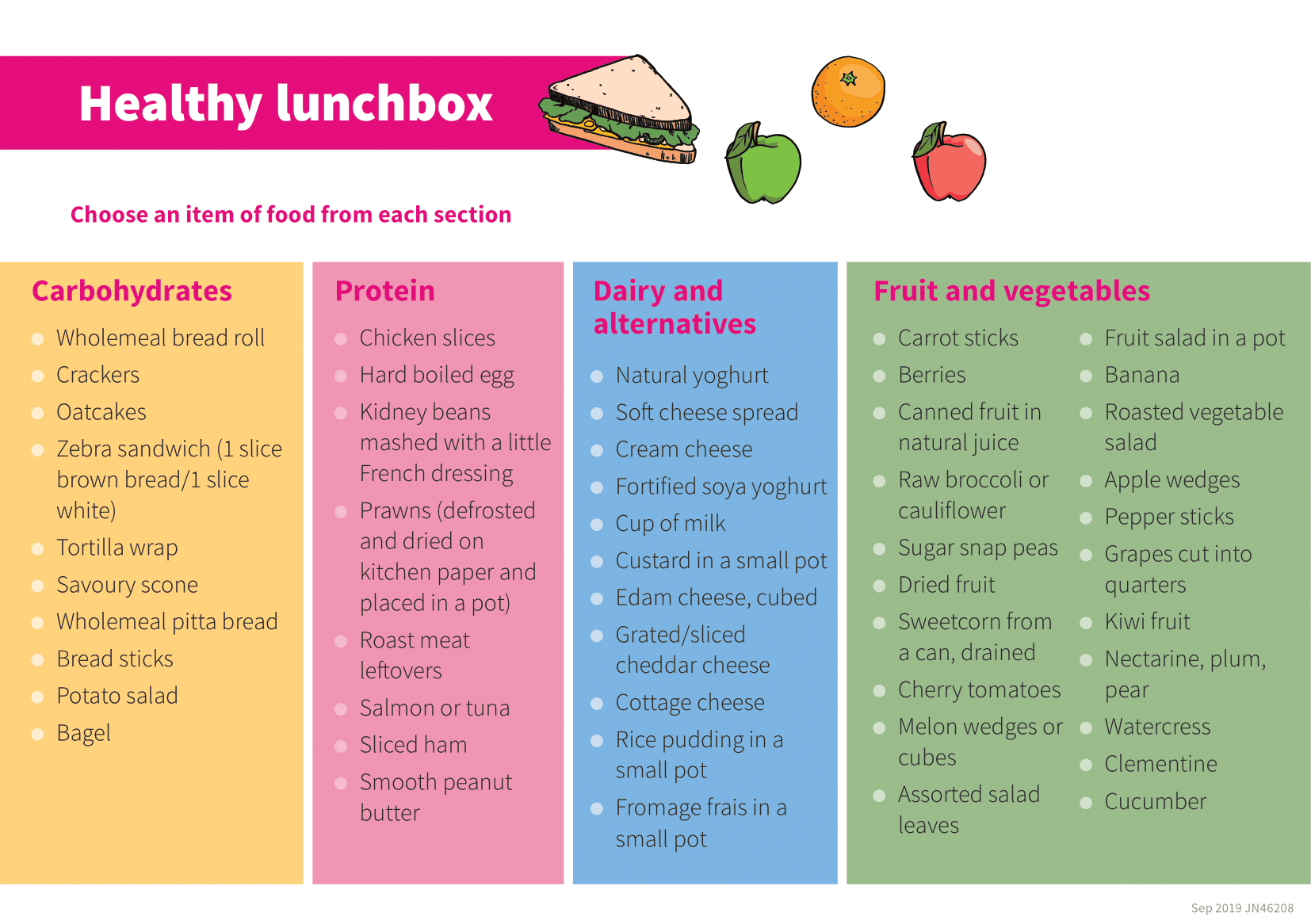
To make the perfect packed lunch, you will need to have a good balance of Carbohydrates, Protein, Dairy (and its alternatives), Fruit and Vegetables. Each of these nutritional corner-stones build a solid foundation for your child’s growth and development, so it is important to ensure these are included.
Carbohydrates are what gives your child energy and fiber that helps digestion, manage blood sugar levels and cholesterol. Proteins build muscles, support immune system function and help cells repair. Dairy (and its alternatives) are crucial sources of Calcium for children, which supports bone growth and dental health. Fruits and vegetables provide additional fiber and safe sugars to keep children going, as well as provide additional minerals and vitamins necessary for their growth and health, such as vitamin c.
Corner-stone Foods
Below is a variety of different food options that fit into the necessary categorizes: carbohydrates, proteins, dairy (and alternatives), fruit and vegetables.
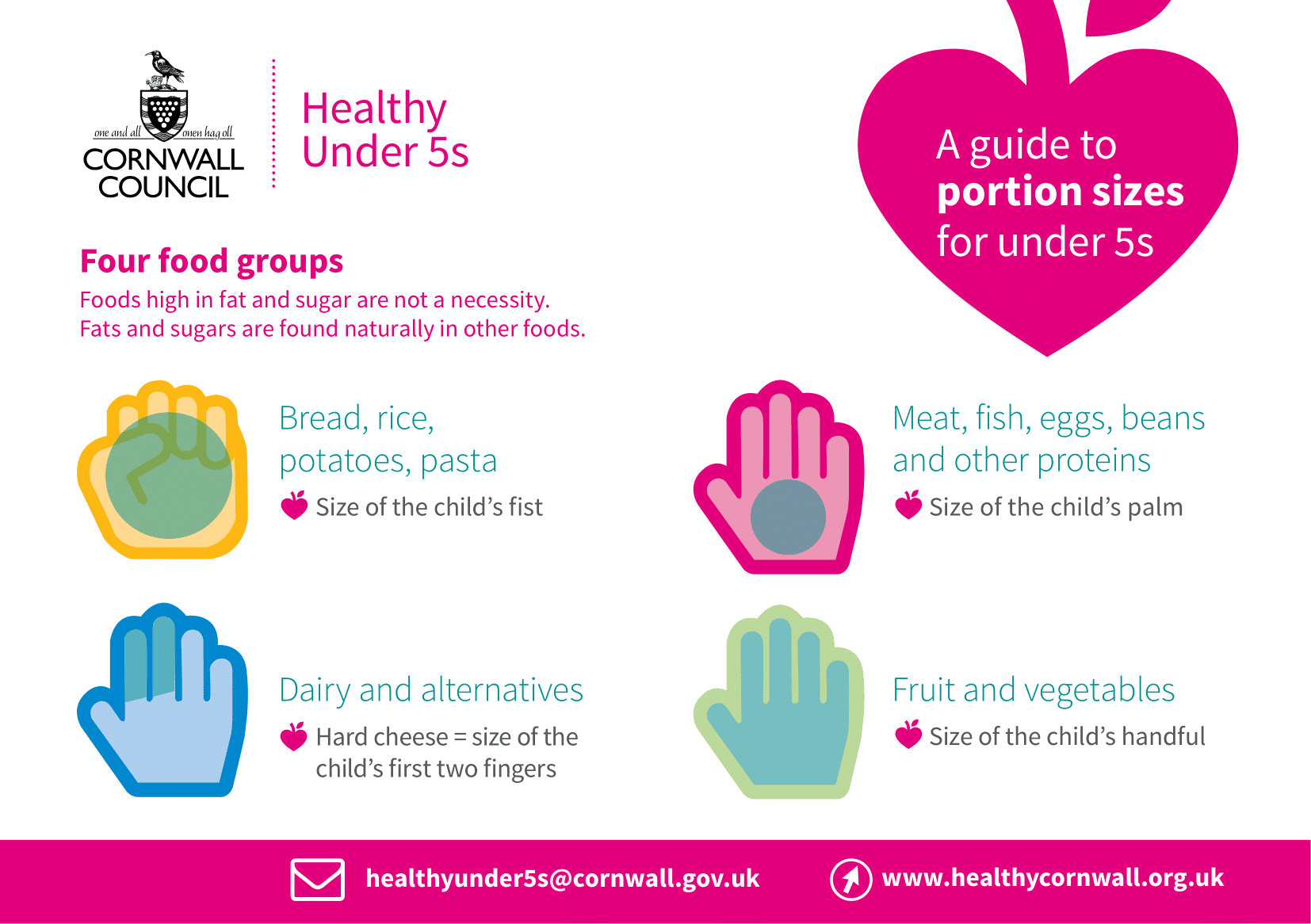
Portion Sizes
Alongside having the correct items in your child’s lunch box, it is also important to make sure your child has the right amount of food.
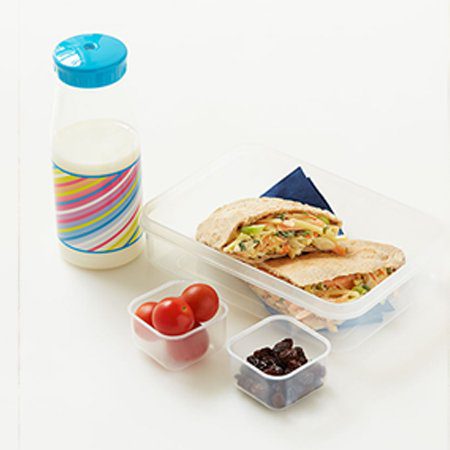
Packed Lunch Suggestions
Here are a few recipes we can suggest for families uncertain of what a packed lunch should contain.
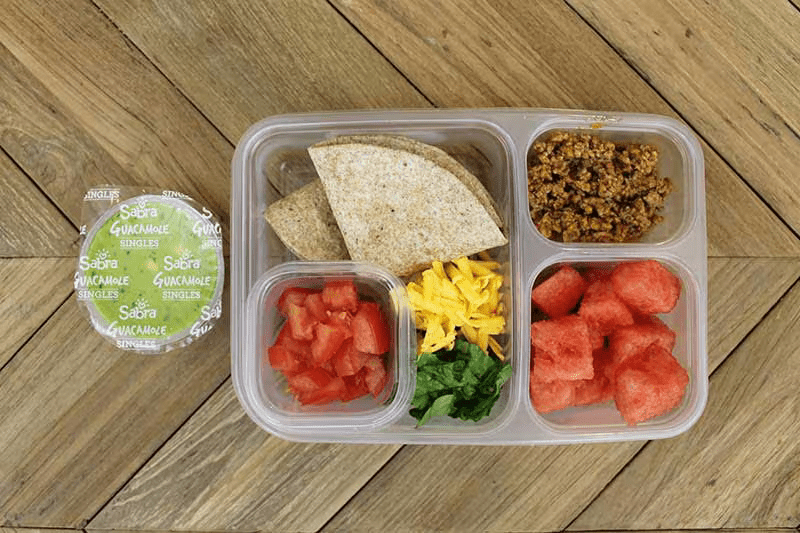
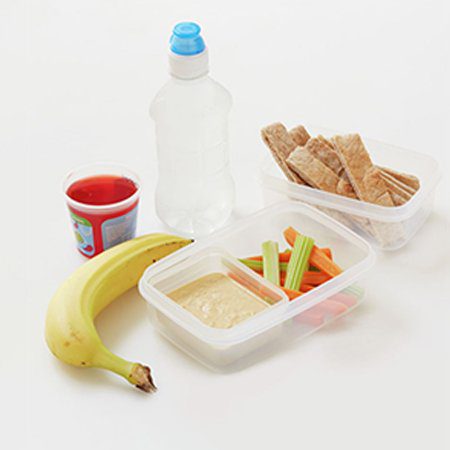
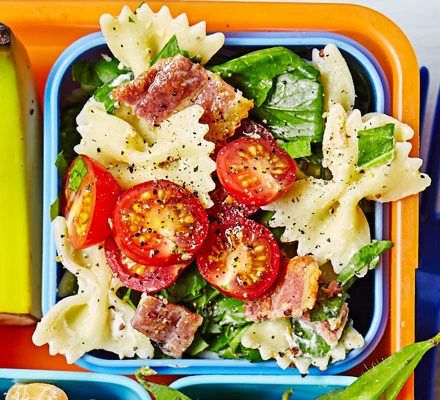
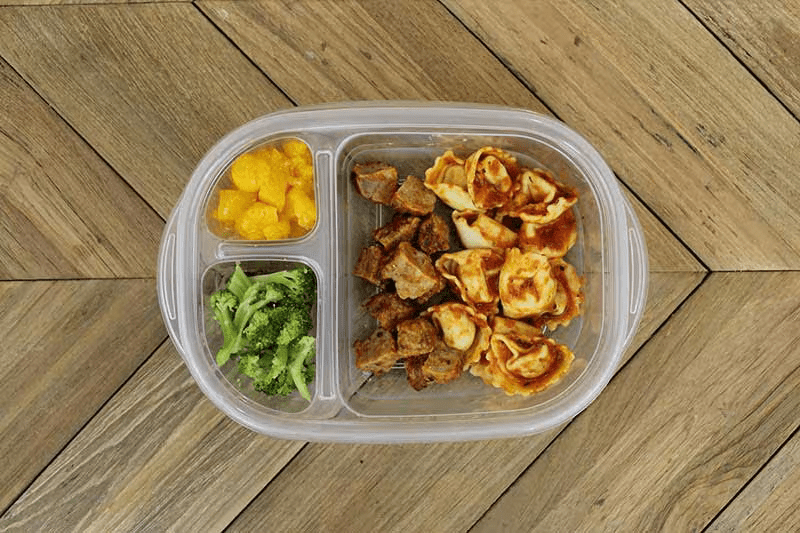
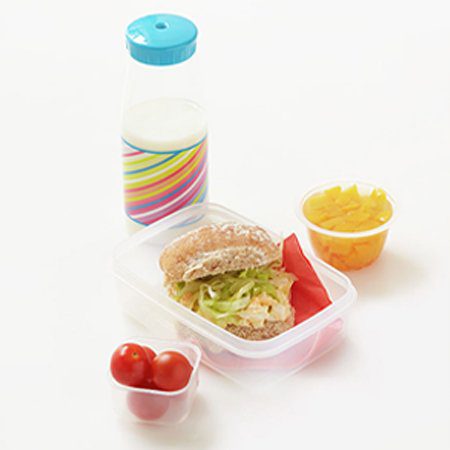
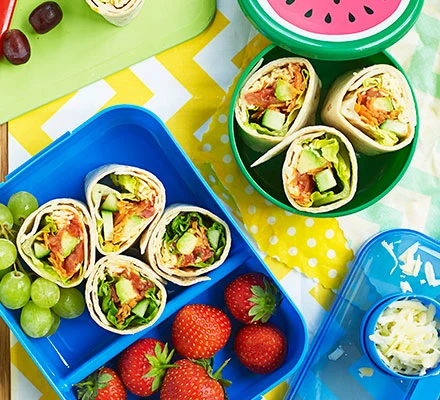
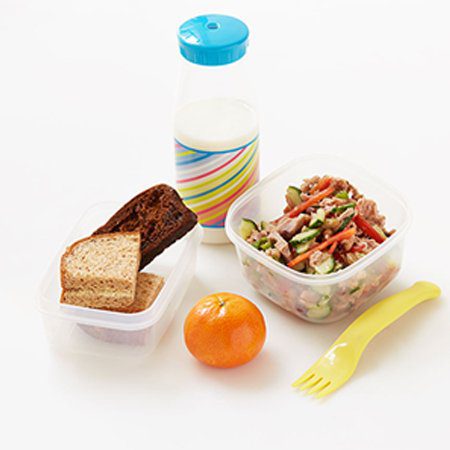
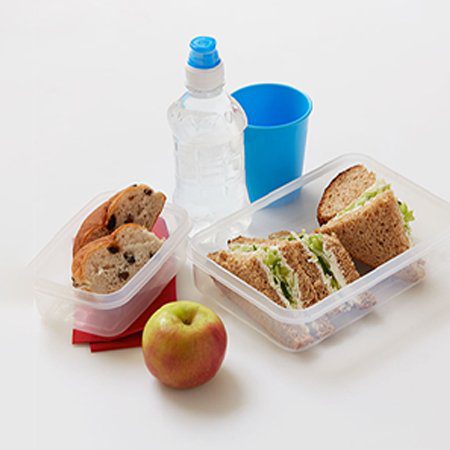
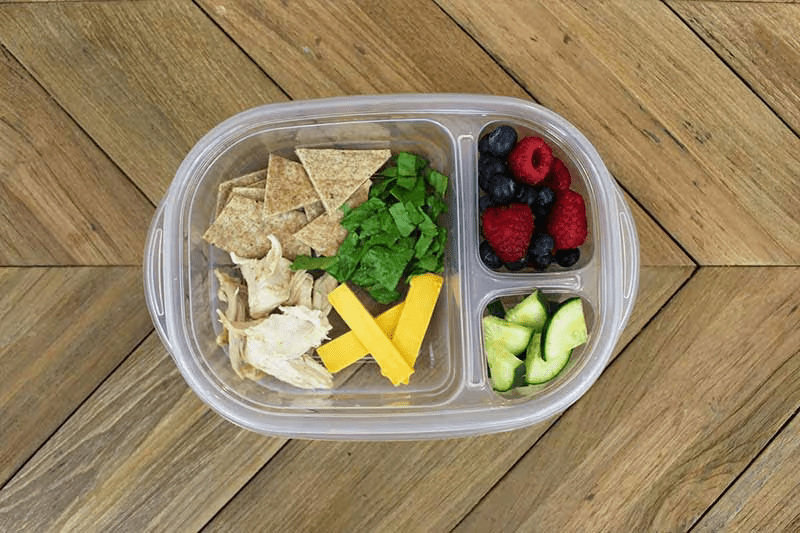
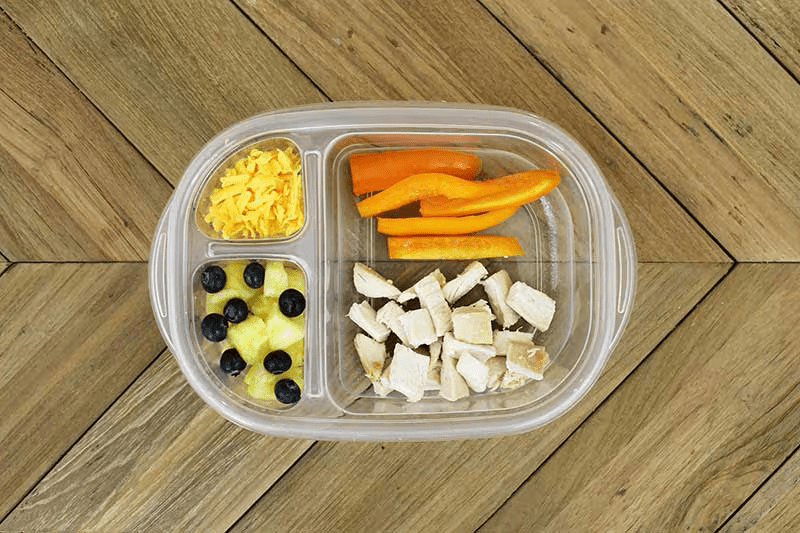
With the wide world of foods, there will more often or not be something that a child doesn’t want to eat. This is completely normal toddler development however with time this behaviour can become a problem when cooking meals or making up lunch boxes.
Note on lunchboxes
The nursery does not have fridge space or hot-hold space to keep meals cold or hot respectively, and lunches will not be reheated for the children. As of such families are recommended to use thermal lunch boxes to keep meals optimal temperatures before being served.
Sugar Awareness
There is a lot of sugar in certain foods which can give your child a lot of energy! However too much energy can negatively impact your child’s health such as making it difficult for them to sleep as they are ‘buzzing’ with energy.
It is important that there is a healthy balance of sugar in their diet but not too much – unfortunately with sugar being added to a lot of products, this can be challenging even for seasoned parents!
Simple Homemade Snack Ideas
DIY snacks can be healthier and often cheaper than packaged ones. Making them with the kids can also be lots of fun and a great activity to do together. Give these great, easy-to-prepare snack ideas a try today!
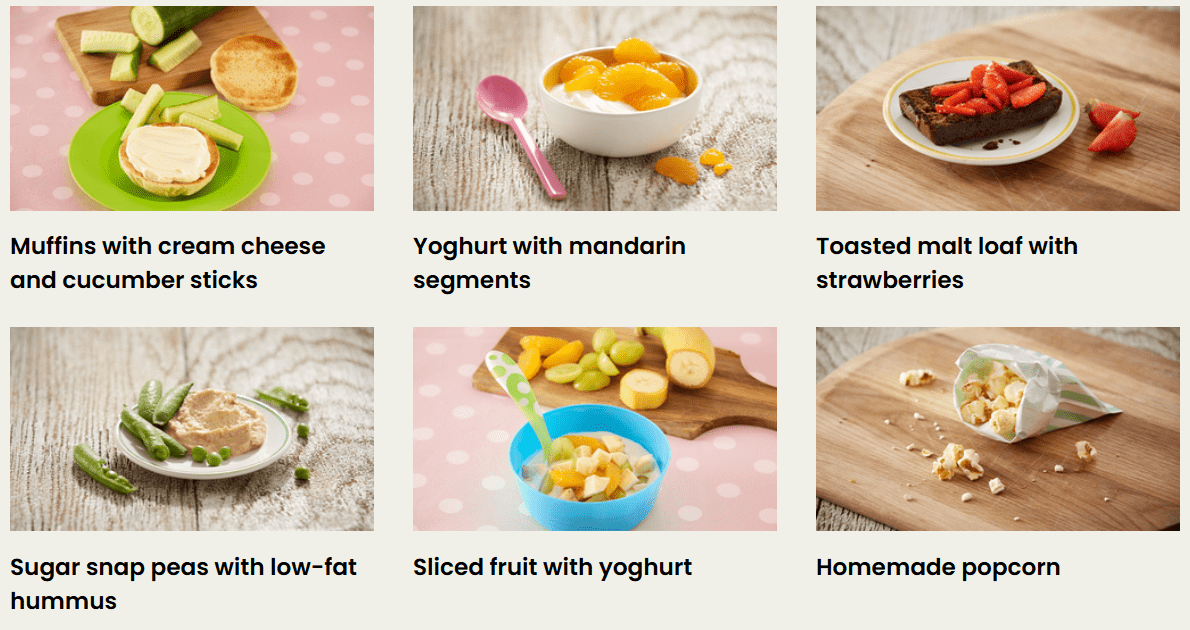
Did you know . . .
A penguin bar has 10.2g of (free) sugar in it, and a two year old child’s recommended limit of (free) sugar is 14g a day!
Fruit & Veggie Snack Ideas
Fresh fruit and vegetables are always the best snack choice for your kids – they contain vitamins and minerals, are a good source of fibre and count towards their 5 A Day. Plus, they’re easy to eat on the go!
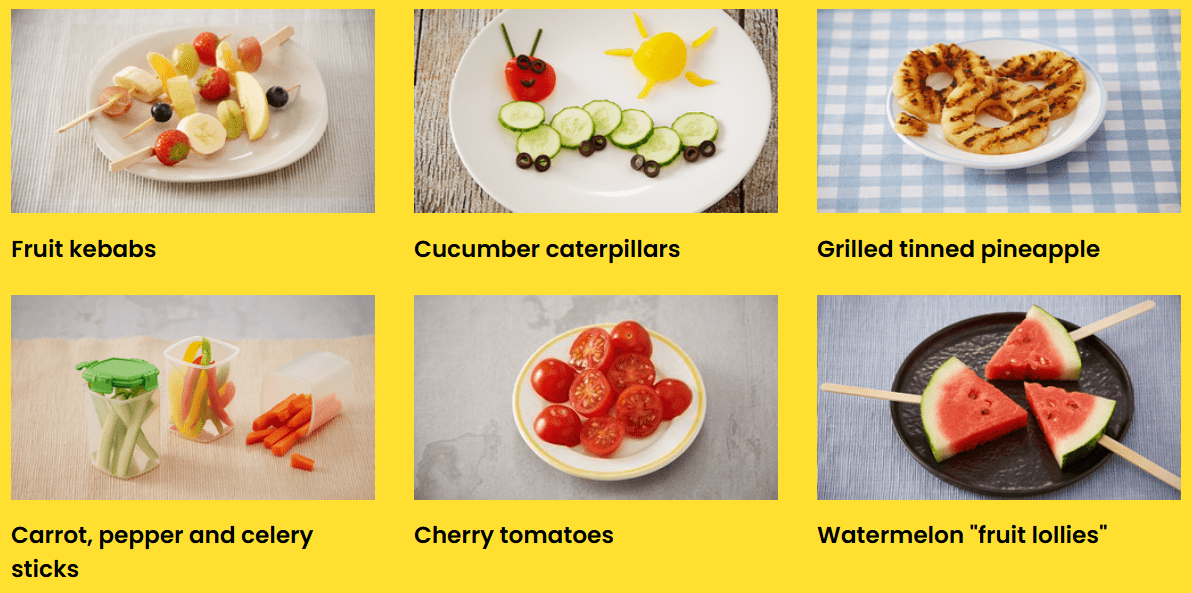

A speedy scan of your family’s favourite products reveals a range of healthier swaps for next time you shop. It’s as easy as scan, swipe, swap!
Suggestions & advice provided by NHS – Better Health
Staying Hydrated
Hydration is a crucial part of ensuring children are healthy and happy, and encouraging children to drink water is a great way to set them up for success in the future! Water is vital for our bodies to function properly, such as helping to regulate your temperature, aiding digestion, etc.
At the GBDN, staff offer children the choice of a cup of water or milk throughout the day, often with snack and meal times. Certain classrooms with the older, independent children have water towers where children can pour their own cups of water, whenever they’d like. Families are also invited to bring in a labelled bottle for their child to drink from.
The GBDN does not serve children fizzy drinks such as Cola, Pepsi, etc. regardless of whether they are the sugar-free version or not. Fizzy drinks do not hydrate as well as water, and often have caffeine or added sweeteners in them that can increase thirst or cause “dry mouth”. We ask that families do not provide their child with these types of drinks for nursery as we want to maintain a healthy eating environment.
Did you know . . .
Drinks such as tea, coffee and fruit juices do contribute to your water consumption each day, however they themselves may have negative side affects such as caffeine intake or added sugars.
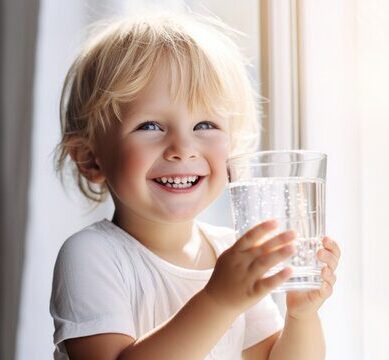
Recommendations:
Get them their own drinks bottle! See if you can find one with their favourite character, or maybe their name.
Keep their drinks bottle full and reachable! Your child may not always want to say they are thirsty, so allowing them the independence to get their own drink not only keeps them hydrated, but they also grow their confidence.
Get them involved in the process! Show your child how to refill their drinks bottle from the kitchen sink.
Ask them often, especially in summer! Children are very busy rushing around and they may forget to drink, especially if they are excited.
Have your own drink at meal times! Children copy adults behaviour and if they see you drinking water, they are more likely to do as well.
